
GIF-IAEA Joint Webinar: Artificial Intelligence Advances in the Nuclear Energy Sector
This webinar is part of a series of webinars organised once a year and hosted alternatively by the IAEA and GIF.
The link to register to this webinar can be found on this page under "about this webinar".
Who should attend?
Policymakers, industry professionals, regulators, researchers, students, the general public.
Please use the button below to register to this webinar.
About this joint IAEA GIF Webinar
The International Atomic Energy Agency (IAEA) and the Generation IV International Forum (GIF) are pleased to announce a joint webinar focusing on Artificial Intelligence Advances. The rapid and successful AI growth in the nuclear energy sector requires investment in fundamental engineering education capabilities and skills development. The future belongs to a combination of irreplaceable human judgement and creativity with AI problem-solving tools. The prestigious panel session composed of Prof. Hany Abdel-Halik from Purdue University, Mr. Shahab Dabiran from OECD-Nuclear energy Agency and Prof. Pavel Tsvetkov from Texas A&M University will present and discuss current artificial intelligence (AI) activities for nuclear power applications, including reactor design, plant operations, nuclear fuel cycle as well as engaging, training and educating nuclear engineering students in this exciting AI domain.
Objectives of the Webinar:
- Present the IAEA Collaborating Centre on AI: Benchmarking, Training, and a Near-Term R&D Roadmap. – Mr. Hany Abdel Khalik (Purdue University, USA)
- Present the OECD Nuclear Energy Agency (NEA): Advanced Fuel Cycles and AI in Nuclear Research – Mr Shahab Dabiran (NEA/OECD)
- Present - AI-Driven Evolution in Nuclear Engineering: Meeting Modern Energy Demands through Advanced Research and Education - Mr. Pavel Tsvetkov (Texas A&M University, USA)
- Discuss a range of possible AI applications in reactor design, nuclear fuel cycle, operations.
- Provide an overview of a few AI tools that are used and discuss the associated benefits and challenges of their applications
- How to balance human judgement and creativity with AI tools
This webinar is part of the ongoing collaboration between the IAEA and GIF to promote education and training in advanced nuclear technologies. It aligns with the IAEA's commitment to supporting Member States in learning about sustainable nuclear energy systems and their diverse applications. It also aligne with GIF goals of sharing knowledge about applications and development of Generation IV Systems for electric and non-electric applications.
We invite professionals, researchers, and stakeholders in the nuclear and AI industries to join us for this informative session, which promises to be a valuable platform for knowledge exchange and discussion on the integration of AI technologies into the nuclear sector.
This webinar will be moderated by Patricia Paviet (GIF Education and Training Working Group - ETWG) and Alexei Miassoedov (IAEA) with technical and coordination support from Alexiei Ozeretzkovsky (GIF TS) and Nicolas Schirmann (GIF TS).
Presentation of the webinar
Meet the speakers and moderators
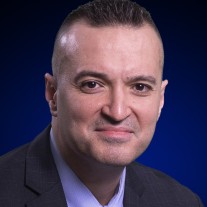
Pr
Hany S. ABDEL-KHALIK
Dr. Hany S. Abdel-Khalik is a Professor in the School of Nuclear Engineering at Purdue University and the Founder of Covert Defenses LLC. He serves as Technical Lead of the IAEA Collaborating Centre on Artificial Intelligence for Nuclear Power and directs the CYNICS Research Group at Purdue, where his work focuses on advanced modeling, artificial intelligence, and resilient digital systems.
He earned his Ph.D. and M.Sc. in Nuclear Engineering from North Carolina State University and his B.S. in Nuclear Engineering from Alexandria University, Egypt. His professional experience includes academic appointments at Purdue University and North Carolina State University, joint faculty service with Idaho National Laboratory, and industry experience with AREVA-NP.
Dr. Abdel-Khalik’s research brings together information theory, physics-informed modeling, uncertainty quantification, and digital twin methodologies. His work has contributed to the development of entropy-driven approaches to anomaly detection, industrial system resilience, and secure data architectures, with results documented in peer-reviewed publications and intellectual property disclosures.
He has received several recognitions for research, mentorship, innovation, and technology commercialization.
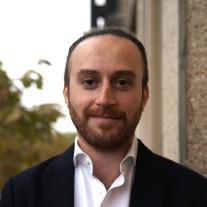
Mr
Shahab DABIRAN
Mr. Shahab Dabiran is a Nuclear Scientist at the OECD Nuclear Energy Agency (NEA), where he supports international research on advanced fuel cycles and supports collaborative technical projects on topics such as fuel cycle closure and Artificial Intelligence. He has over 14 years of experience in the nuclear industry. Prior to joining the NEA, he spent nearly a decade at Ontario Power Generation (OPG), supporting the Pickering and Darlington Reactor Physics teams, as well as the Darlington refurbishment return-to-service projects, where he contributed to reactor physics commissioning tests. While at OPG, he developed multiple tools using data science, machine learning, and AI to enhance core surveillance, fuelling strategies, reactivity management, and fuel defect identification.
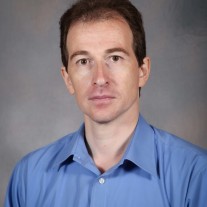
Pr
Pavel V. TSVETKOV
Prof. Pavel Tsvetkov is a Professor of Nuclear Engineering at Texas A&M University and Director of the Graduate Program, where he leads the Advanced Energy Systems Laboratory. His work focuses on AI‑enabled design, intelligent operations, and advanced reactor and fuel‑cycle technologies, with applications spanning nuclear security, autonomous I&C, waste minimization, and resilient energy systems. He is an active contributor to national and international nuclear security efforts and leads the data science and digital technologies thrust within the NNSA ETI Consortium. Dr. Tsvetkov has published more than 300 peer‑reviewed papers, conference proceedings, and technical reports, and has served as editor or major contributor to 15 books on energy, environment, and nuclear engineering. He holds multiple patents in advanced reactor technologies. His professional service includes leadership roles such as Chair of the ANS Reactor Physics Division, Associate Editor of the ASME Journal of Nuclear Engineering and Radiation Science, and current Vice Chair of both the ASME Technical & Strategic Advisory Board and the ANS Publication Steering Committee, as well as Chair of the ANS Book Publishing Committee. He continues to serve on the ANS Reactor Physics Program Committee.

Dr
Alexei MIASSOEDOV
Dr. Alexei Miassoedov graduated in theoretical and experimental physics from the Moscow State Engineering Physics Institute in 1989 and joined the Kurchatov Institute, where he worked on modeling fission product release from irradiated fuel. He earned his PhD in mechanical engineering from the Karlsruhe Institute of Technology in 1996 and subsequently joined its Institute for Materials Research at the KIT.
From 1996 to 2018, his work focused on reactor safety and severe accident research, including LWR fuel behavior under severe damage conditions, core melt progression, in- and ex-vessel melt retention, and related material behavior.
Since 2018, he has served as a Nuclear Engineer at the International Atomic Energy Agency (IAEA), specializing in the technology development of advanced light water reactors within the Nuclear Power Technology Development Section, Division of Nuclear Power, Department of Nuclear Energy.

Dr
Patricia PAVIET
Dr. Patricia Paviet was the first chair of the GIF Education and Training Working Group (2015-2024). She now focuses on leading the efforts of the successful GIF Education and Training webinars series and has been doing so since the inception of this initiative in September 2016.
She serves on the GIF MSR pSSC representing the United States since 2021. She joined GIF in November 2015, as chair of the Education and Training Task Force. Outside GIF, Dr. Paviet is the National Technical Director of the Molten Salt Reactor Program for the US Department of Energy, Office of Nuclear Energy. She is managing the research supporting molten salt reactor development across six U.S. national laboratories. She is also a Senior Technical Advisor at Pacific Northwest National Laboratory, providing guidance on used nuclear fuel recycling. She has an extensive technical background on the nuclear fuel cycle (front and back end).